Gasless Transactions on Base: Do You Still Need ETH to Pay Gas?
The short answer: sometimes — and the "sometimes" keeps growing
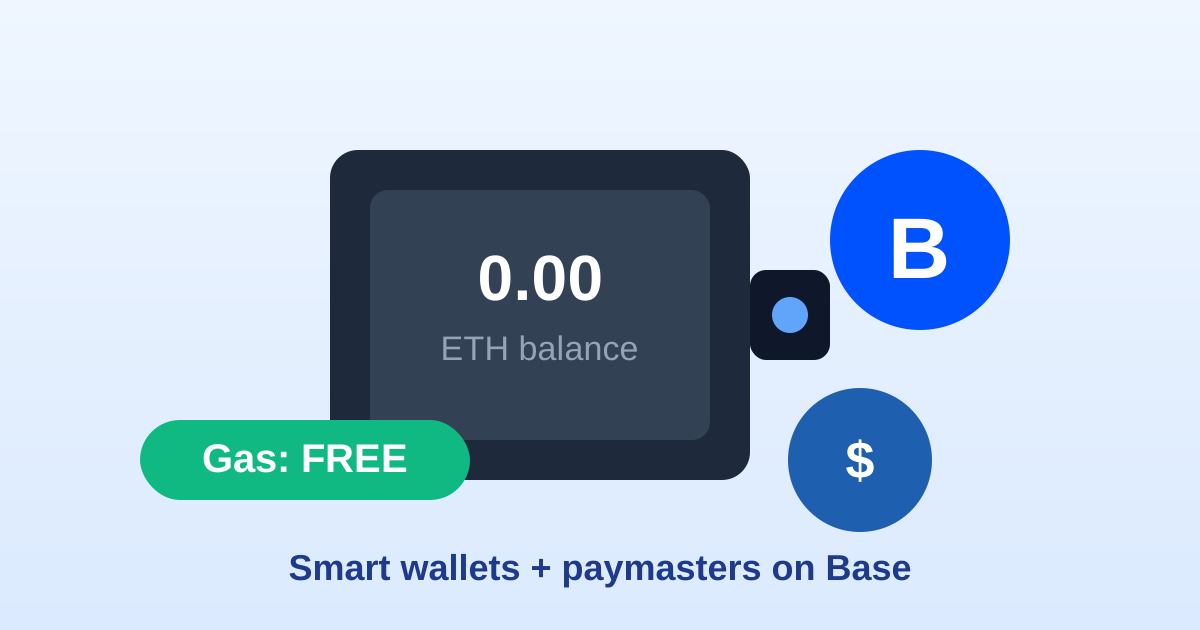
Can you use Base with literally zero ETH in your wallet? Increasingly, yes — with conditions. Millions of transactions happen daily on Base where the sender holds no ETH at all: apps sponsor the gas, or wallets let users pay fees in USDC. But the default MetaMask experience still needs ETH, and "gasless" always has a sponsor, a markup, or both hiding somewhere. This guide explains how the whole machine works, where you've already used it without noticing, and whether the old advice — keep a few dollars of ETH — still stands in 2026.
Worth knowing the scale: tens of millions of smart accounts are now live across Ethereum L2s, and consumer apps increasingly treat "user pays gas" as a design failure. The question isn't whether gasless works — it's when it applies to you.
How "gasless" actually works (one paragraph, no jargon)
Under the ERC-4337 "account abstraction" standard, a wallet can be a smart contract instead of a plain key pair. Transactions from these smart wallets travel through intermediate infrastructure, and one participant — the paymaster — can step in and pay the gas on your behalf. The paymaster gets its money back through its business model: the app sponsoring you treats gas as marketing spend, or a service converts your USDC into ETH behind the scenes and takes a small cut. Separately, EIP-7702 (live since the Pectra upgrade in May 2025) lets a normal MetaMask-style wallet temporarily act like a smart account inside a single transaction — so the old wallets get the new superpowers without migrating anywhere.
Net effect: the fee still gets paid on-chain, always — someone just pays it for you, or converts your token to pay it. "Gasless" is a billing arrangement, not a physics change.
Where you've already used it without noticing
- Coinbase Smart Wallet on Base: small transfers and certain actions arrive with gas sponsored — a new user can onboard with zero ETH and things just work. This is the flagship example and the reason "I don't have ETH for gas" stopped being the universal Base blocker.
- Apps with a "sponsored" badge: games, mints, and consumer apps that pay a paymaster to cover your transaction on their contracts. If the confirm screen says gas: FREE, that's the mechanism.
- Embedded wallets: apps that generate a wallet inside the login flow (Privy-style) usually sponsor early transactions — your first three trades feel free because someone budgeted for them.
- Permit-style approvals: the "Sign instead of Confirm" prompts you see on Uniswap — signing a message costs nothing at all. Not full gaslessness, but the free half of the two-transaction dance my approval guide describes.
The pattern in every case: the sponsorship lives on the app's side. Bring those same tokens to a random DEX with a plain EOA wallet, and it's normal gas rules — which is why the buffer question below still matters.
Paying gas in USDC instead of ETH
The middle path between "sponsored" and "hold ETH": several wallets and paymasters now support ERC-20 gas payment — your USDC (or USDT) covers the fee, the paymaster converts it to ETH behind the scenes, and your wallet never needs the native token. For people whose entire Base balance is a stablecoin stack, this solves the classic stuck-wallet problem from my gas reserve guide without any top-up ritual.
The cost of the convenience: conversion spreads typically add somewhere in the 5-15% range over the raw gas cost. On an L2 where the raw fee is a fraction of a cent, that markup is usually a rounding error on a rounding error — paying 15% more of basically nothing. But it's worth knowing the mechanics, because the same convenience priced against a mainnet fee would be real money. On Base in 2026, it mostly isn't.
The catch: "free" is a budget line, not a law of nature
Every sponsored transaction is someone's marketing or ecosystem spend. Roughly speaking, sponsorship money comes from project acquisition budgets, chain ecosystem funds, and the ERC-20 conversion spreads — the genuinely-free share is subsidy, and subsidies have lifecycles. Precedent exists: L2 ecosystems have turned sponsorship dials down when budgets reset, and apps that once ate gas started passing it through. None of this predicts Base specifically — Coinbase's commitment to the chain makes consumer sponsorship a durable strategy there — but it does mean never architecting your own finances around free gas.
The two failure modes I actually see: someone keeps their whole balance in USDC expecting every app to sponsor forever, hits an unsponsored contract, and is stuck until they sort out gas; or someone treats the gasless UX as "fees are gone entirely" and gets surprised when they use a wallet or bridge that charges normally. The cure for both is the same five-dollar fix below.
What I actually do (and recommend)
My setup hasn't changed much since before any of this existed, ironically because gas got so cheap that the buffer is trivial: keep $5-10 of ETH on Base as the reliable floor, use sponsored flows and USDC-gas when they appear, and treat gasless as a bonus rather than a foundation. The buffer costs one coffee, lasts months at 2026 fee levels, and makes every sponsorship a delight instead of a dependency. If you're setting up fresh, the wallet setup guide and the exchange withdrawal walkthrough both include the top-up step.
Where this trend is going is genuinely interesting: as smart wallets and EIP-7702 spread, the "you must understand gas" era of onboarding is ending — fees are becoming an invisible implementation detail paid by apps, the way shipping is invisible in e-commerce. For the mechanics of what those fees actually are, when they still matter, the L2 gas primer and the live tracker remain the ground truth. The gas is still there. You just notice it less every year.
Trade on Base / Arbitrum with Low Fees
Choose a trusted platform to swap, bridge, and trade on L2 networks.
Affiliate links — we may earn a commission at no extra cost to you.