How to Use Aave on Base: Lending, Borrowing, and What the Gas Actually Costs
What Aave is, in one paragraph
Aave is a lending protocol — you supply crypto assets to earn interest, and other users borrow those assets by posting collateral. It is the largest DeFi lending platform by total value locked, and its V3 deployment on Base means every action costs under a cent instead of the $5-30 it costs on mainnet. You do not need a credit check, a bank account, or anyone's approval; the protocol manages collateral and liquidation automatically through smart contracts. If you are new to DeFi generally, the best L2 for DeFi comparison gives the broader landscape.
The four things you do on Aave
Almost every Aave interaction is one of four actions:
- Supply — deposit an asset (USDC, ETH, etc.) into a lending pool. You earn interest on it, and it becomes collateral you can borrow against.
- Borrow — take a loan in a different asset, backed by your supplied collateral. You pay interest on the borrowed amount.
- Repay — return the borrowed asset (plus interest) to close or reduce the loan. Your borrowing power is restored.
- Withdraw — pull your supplied collateral back out, as long as your remaining collateral still covers any outstanding borrows.
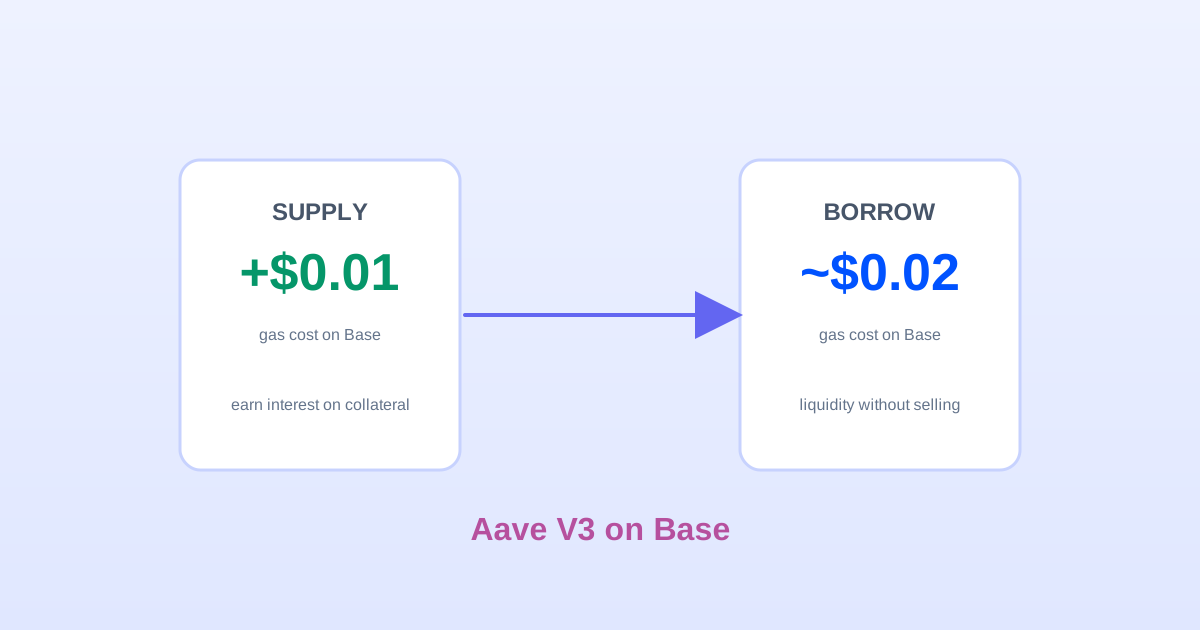
Each of these is a single on-chain transaction on Base, and each costs about $0.01-0.02 in gas. The approval step before your first supply or borrow of a new token costs another $0.01. The total gas for a full supply-and-borrow cycle — approve, supply, approve, borrow — is about $0.04. On mainnet, the same cycle costs $10-40.
Why Base specifically for Aave
Aave V3 is deployed on several chains — Ethereum mainnet, Arbitrum, Optimism, Polygon, Avalanche, and Base. Base has become one of the most active markets for it because the fee difference is material. A lending position is not a one-time transaction; it is a series of actions over time — supply, adjust, repay, withdraw, maybe supply more. At mainnet fees, each adjustment costs enough that people hesitate. At Base fees, managing the position is effectively free.
Base also has deep stablecoin liquidity, which matters for Aave because the most common use case is supplying USDC and borrowing against it. The USDC cost guide shows why Base is the cheapest place to move stablecoins; Aave just layers the lending protocol on top of that cheap base layer.
The interest rates on Aave Base are market-driven and vary by asset and utilization. They are not lower because the chain is cheaper — rates reflect supply and demand for borrowing, not gas costs. What is cheaper is the overhead of managing the position, which compounds over months of active use.
The real cost breakdown
Here is what a typical Aave cycle on Base actually costs in gas, based on the live tracker data and my own receipts:
| Action | Gas on Base | Gas on mainnet |
|---|---|---|
| Approve token (one-time per asset) | $0.01 | $3-8 |
| Supply collateral | $0.01-0.02 | $5-15 |
| Borrow | $0.02 | $5-12 |
| Repay | $0.01-0.02 | $5-10 |
| Withdraw collateral | $0.02 | $5-12 |
| Full cycle total | ~$0.06-0.08 | $23-57 |
The mainnet numbers assume a quiet day. During congestion, double them. The Base numbers barely move. This is why I tell people who are "trying DeFi" to do it on Base: the cost of learning — of making a mistake, supplying the wrong amount, having to withdraw and re-supply — is a few cents instead of a few dinners.
The risks that are not in the UI
Aave's interface is clean and the protocol is well-audited, but three risks are real and worth stating plainly:
- Liquidation. If your Health Factor drops below 1.0 — because the value of your collateral fell or your borrowed asset's value rose — the protocol automatically sells part of your collateral to repay the loan, plus a liquidation penalty (usually 5-8%). You lose money and you cannot undo it. Keep your LTV under 50% and this essentially never happens; push it above 70% and you are living on the edge.
- Variable interest rates. Borrow rates change continuously based on utilization. A rate that looks like 4% APY when you borrow can be 12% a week later if demand spikes. This is not a bug — it is how the market clears — but it means your cost of borrowing is not fixed unless you specifically chose a stable rate (which Aave offers for some assets).
- Smart contract risk. Aave's contracts are among the most audited in DeFi, but no contract is risk-free. A critical vulnerability could theoretically drain a lending pool. This is the same risk every DeFi protocol carries; Aave has not had a major exploit, but the risk is never zero.
For debugging failed transactions — a supply that reverted because of an approval issue, a borrow that failed because your LTV was too high — the failed transaction guide and the Basescan guide walk through reading the revert reason on the explorer.
When Aave on Base is the right tool (and when it is not)
Aave is the right tool when you hold crypto assets you want to keep (ETH, stablecoins, BTC) and need liquidity in a different asset without selling. Supply USDC, borrow ETH to use in a yield strategy, keep your USDC earning supply interest. Or supply ETH, borrow USDC to pay a bill, repay when your next income arrives. The interest is usually cheaper than a credit card and there is no credit check — but the liquidation risk means you must manage it actively.
It is the wrong tool if you are trying to maximize yield on idle stablecoins and nothing else — a dedicated yield protocol or even a DEX liquidity position may pay more, depending on the market. Aave's supply APYs are modest (they reflect what borrowers are willing to pay, not a protocol subsidy). And it is absolutely the wrong tool if you do not understand liquidation — borrow too close to the limit, and a market dip can cost you more than a year of interest.
For keeping a small ETH reserve to manage positions and pay gas without worry, the gas reserve guide shows how far $5-10 of ETH goes on Base — enough for hundreds of Aave transactions.
Trade on Base / Arbitrum with Low Fees
Choose a trusted platform to swap, bridge, and trade on L2 networks.
Affiliate links — we may earn a commission at no extra cost to you.