Unichain Gas Fees Explained: What Swaps, Sends, and Liquidity Actually Cost
The short answer first
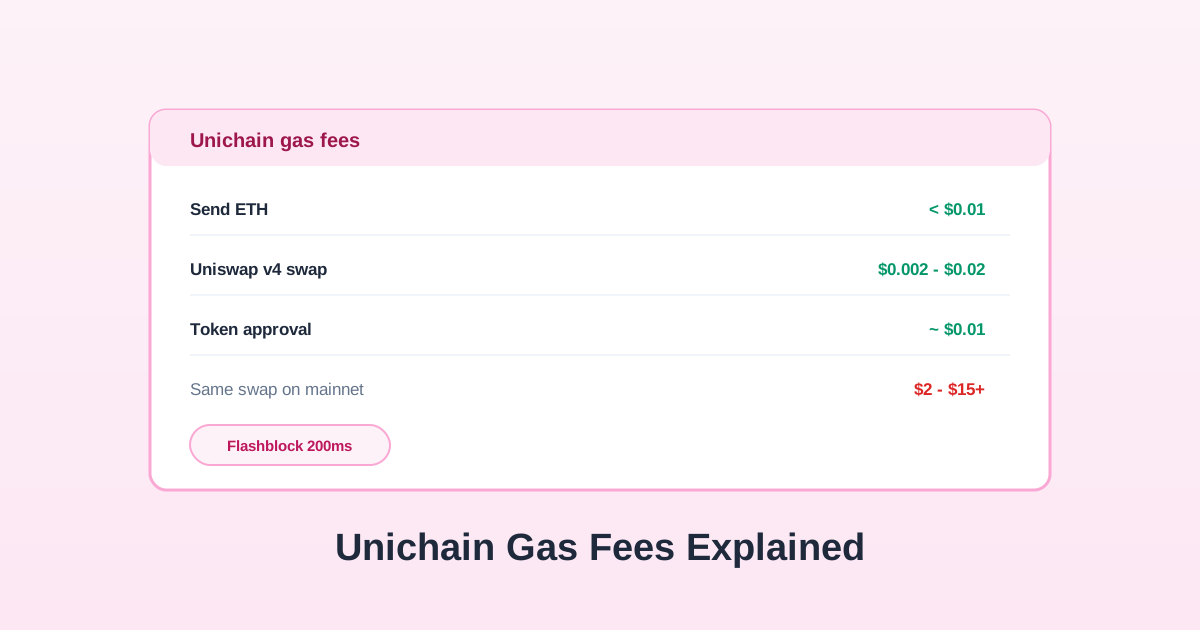
On Unichain in 2026, a simple send of ETH or a token typically settles for well under a cent, and a Uniswap v4 swap usually lands somewhere between a fraction of a cent and a few cents depending on the route and how much calldata it carries. That is roughly 95% below the same action on Ethereum mainnet — ethereum.org's network screen literally rounds Unichain's average transaction fee to $0.00. This guide explains where that number comes from, when it stops being true, and how to avoid the moments it doesn't.
Why a Unichain fee has two parts
Unichain is an OP Stack rollup, so every transaction pays for two different resources, bundled into one gas charge your wallet shows:
- The L2 execution fee: the cost of actually running your transaction on Unichain — gas used times the L2 gas price. This is the part one-second blocks and a cheap sequencer make tiny and remarkably stable.
- The L1 data fee: the cost of posting your transaction's compressed calldata to Ethereum so it's available for settlement. This piece moves with Ethereum blob congestion and grows with the size of your transaction.
The L1 fee is why a complex swap can cost more than a simple send even though both take the same few milliseconds on L2: the swap carries more calldata. It's the exact same architecture as Base, and the Base gas guide walks through the same two components with receipts if you want the longer version. Fees are priced in gwei and paid in ETH — the unit itself takes five minutes to demystify in the gwei explainer.
What each action actually costs
Typical costs under normal 2026 conditions. Treat them as ballpark, not quotes — the L1 data piece means your actual receipt depends on what Ethereum blobs cost that hour:
| Action on Unichain | Typical cost | Notes |
|---|---|---|
| Send ETH | under $0.01 | 21,000 gas, same as every EVM chain |
| Send an ERC-20 token | ~$0.01 | More calldata than a bare ETH send |
| Uniswap v4 swap (single pool) | ~$0.002-0.02 | Singleton contract keeps gas low |
| Multi-hop v4 swap | cents | One atomic transaction, not separate swaps |
| Token approval (first time) | ~$0.01 | Then skip it on later swaps |
| Add / remove liquidity | cents | Tick math happens in the singleton too |
| Same swap on mainnet | $2-15+ | The comparison everyone actually wants |
One subtle but real advantage: on Uniswap v3, a trade routed through two pools was effectively two swap operations. On v4's singleton — which is what runs on Unichain — it's one contract call with shared state the whole way, so multi-hop trades save gas they can't save anywhere else. If your strategy is built around routing, that's the fee discount that quietly compounds.
Flashblocks: why confirmation feels instant
Unichain produces full blocks every second, which is already ten to fifteen times faster than older rollups. Flashblocks go one step further: the sequencer emits a pre-confirmation signal at roughly 200-millisecond intervals, and modern interfaces treat that signal as "your transaction is ordered and will land." Your UI shows the swap as done before a formal block even exists.
Two practical consequences. The good one: front-running windows shrink to a fifth of a second, which is close to meaningless for a human attacker. The thing to understand: a Flashblock signal is a sequencer promise, not Ethereum-level finality — under normal operation it always converts into a real block, but if you are wiring money off that signal programmatically, know what you're trusting. For ordinary trading, just enjoy the speed.
When fees still spike
Cheap is the default, not a law of nature. The fee moves in two situations:
- Ethereum blob congestion. The L1 data fee follows blob demand. When a batch of heavy launches or a big migration fills blob space across all rollups, every OP Stack chain's data fee rises together — Unichain, Base, Optimism alike. The Fusaka fee explainer covers the blob market mechanics and why costs still trend down over years.
- Unichain-specific bursts. Incentive epoch starts, big pool launches, and v4 events create local traffic spikes. The L2 execution fee rises for the duration and typically settles back within the hour.
The cheap trader's response is boring and effective: check a gas tracker, and if the number looks off, wait. Fee differences between a peak hour and a quiet hour are routinely 5-10x, and almost no retail swap genuinely needs to land in that exact hour. The best time to trade guide has the timing patterns.
How much ETH to bring, and the token trap
Gas is paid in ETH, always — even for a USDC swap. A stablecoin balance cannot pay its own network fee, which catches out every newcomer at least once. The practical reserve: $10 of ETH on Unichain lasts months of normal trading, and active swappers might bring $20. The full arithmetic on how many hundreds of transactions that buys is in the gas reserve math.
When you bridge, bridging ETH solves two problems at once: you get the asset and the gas to use it. If you bridge USDC only, you'll need a separate ETH top-up before you can do anything. And the standard safety rules still apply on a fast chain: approve tokens sparingly (approval guide), and if a swap fails you still paid the execution fee — the failed transaction guide explains the receipt.
Trade on Base / Arbitrum with Low Fees
Choose a trusted platform to swap, bridge, and trade on L2 networks.
Affiliate links — we may earn a commission at no extra cost to you.