Robinhood Chain Gas Fees: Why They Spiked, and What Trades Actually Cost
The short answer first
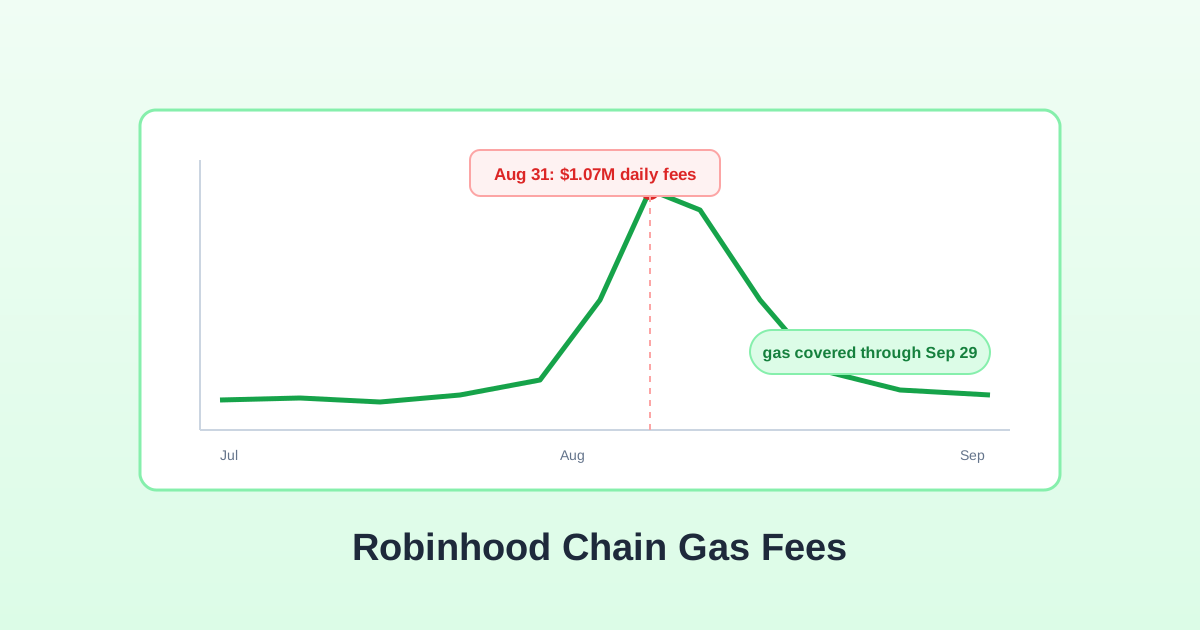
On a normal day, Robinhood Chain behaves like the Arbitrum Orbit network it is: sends and swaps settle for cents or less. During the late-August memecoin surge, demand overwhelmed that cheapness completely — on August 31 the chain generated $1.07 million in fees in a single day, gas hit all-time highs, and Robinhood responded by covering wallet users' gas through September 29. This guide separates the ordinary fee structure from the spike, because they are genuinely different regimes.
How an Orbit fee is constructed
Robinhood Chain's own documentation spells out two components bundled into every transaction's gas charge, denominated in ETH:
- L2 execution fee: gas used times the L2 gas price — the cost of running your transaction on the chain. Low and stable by default, same model as Arbitrum.
- L1 data fee: the cost of posting your calldata to Ethereum for data availability. It scales with the byte size of your transaction and follows Ethereum's data pricing, so heavy calldata (complex swaps, approvals with long parameters) costs more than simple sends.
Standard wallet fee previews and eth_estimateGas already account for both, so users never pay them separately. Developers can cut the L1 piece by packing arguments and batching calls — the docs point at account-abstraction UserOperations for that. The same architecture is explained with receipts on the Arbitrum side in the Arbitrum fee guide, and the gwei unit itself is demystified in the gwei explainer.
What ordinary actions cost
Outside the frenzy — and that is the default state of the chain most hours — typical costs sit in the Orbit family ballpark:
| Action | Typical cost (quiet hours) |
|---|---|
| Send ETH (21,000 gas) | a cent or two, often less |
| Send an ERC-20 token | cents |
| Swap on a DEX | roughly pennies |
| Token approval (first time) | cents |
| Same swap on Ethereum mainnet | $2-15+ |
I keep those ranges deliberately broad: a chain this new with one fee-spike episode on its record hasn't produced the years of receipt data that let me quote tighter numbers the way I can for Base and Arbitrum. The structure, though, is identical to Arbitrum's, and quiet-hour receipts I've seen cluster tightly with Arbitrum quiet-hour receipts. When in doubt, read your own receipt on the explorer before trusting any quote — mine included.
The August spike: what actually happened
The timeline reconstructed from reporting and on-chain data: memecoin launch activity accelerated through August, with launchpads producing as many as 22,600 new tokens on the peak day. On August 30 the chain processed 5.52 million transactions and roughly $1.49 billion in DEX volume. On August 31 it earned $1.07 million in daily fees — more than Solana, Base, or Ethereum generated that day. Gas prices reached record highs for the network as bidding for blockspace turned into an auction, and ordinary users saw swap costs rise to many multiples of quiet-hour levels.
Robinhood's response came fast: the launch-period gas subsidy program (90 days from July 1) was effectively extended for wallet users through September 29, with the company absorbing transaction costs rather than letting the spike price users out. That calmed the public-facing pain, though the underlying blockspace auction kept clearing at high levels when activity stayed hot.
Two lessons from the episode. First, even an Orbit L2 is not immune to fee spikes when a single app category dominates blockspace — the fee is a market price, not a promise. Second, subsidy regimes reshape the numbers you see: while subsidies run, the wallet shows costs the chain isn't actually charging you. Whoever pays the gas makes the rules, and that arrangement has an expiry date.
How to pay less in practice
The playbook is the same boring one that works on every L2, adjusted for this chain's specifics:
- Trade the quiet hours. Fee gaps between peak and quiet times on this chain have been enormous during the memecoin season. If your swap isn't launch-sensitive, waiting hours can be the difference between multiples-of-normal and normal. The best time to trade guide has the patterns.
- Use subsidized flows while they last. Eligible wallet routes currently show zero user-paid gas through September 29; know the date and don't build habits around it.
- Approve once, swap often. The approval is a separate transaction with its own fee and L1 data cost — set a sane allowance once rather than re-approving. The approval mechanics guide explains both the fee and the security side.
- Keep an ETH buffer. Gas is ETH-denominated and a token balance cannot pay it; arriving with the token but no ETH means no transaction at all. $10-20 of ETH covers a long tail of quiet-hour actions per the gas reserve math.
Checking the real fee on the explorer
As on every chain, the receipt — not the wallet preview — is the number that actually happened. After a swap or send, open the network's block explorer from your wallet's transaction view, and the Transaction Fee field shows the executed cost split between L2 execution and L1 data where the explorer supports it. That is how you calibrate whether your wallet's estimates are trustworthy and whether conditions are still spiking.
If a transaction failed, you still consumed execution resources and still paid the fee — that rule is universal across EVM chains. The failed transaction guide walks through reading the revert reason safely, and if you are comparing this chain's quiet-hour economics against other networks before moving funds, the live network fee comparison pulls current gwei alongside typical fees across the major chains. For the strategic picture behind the chain itself, start with the Robinhood Chain overview.
Trade on Base / Arbitrum with Low Fees
Choose a trusted platform to swap, bridge, and trade on L2 networks.
Affiliate links — we may earn a commission at no extra cost to you.